Socio-Informational Dynamics of Mis/Disinformation in Malaysia’s Digital Ecosystem: An Integrative Review
DOI:
https://doi.org/10.21070/kanal.v14i2.1852Keywords:
information disorder, digital ecosystem, political disinformation, deepfakes, media and information literacyAbstract
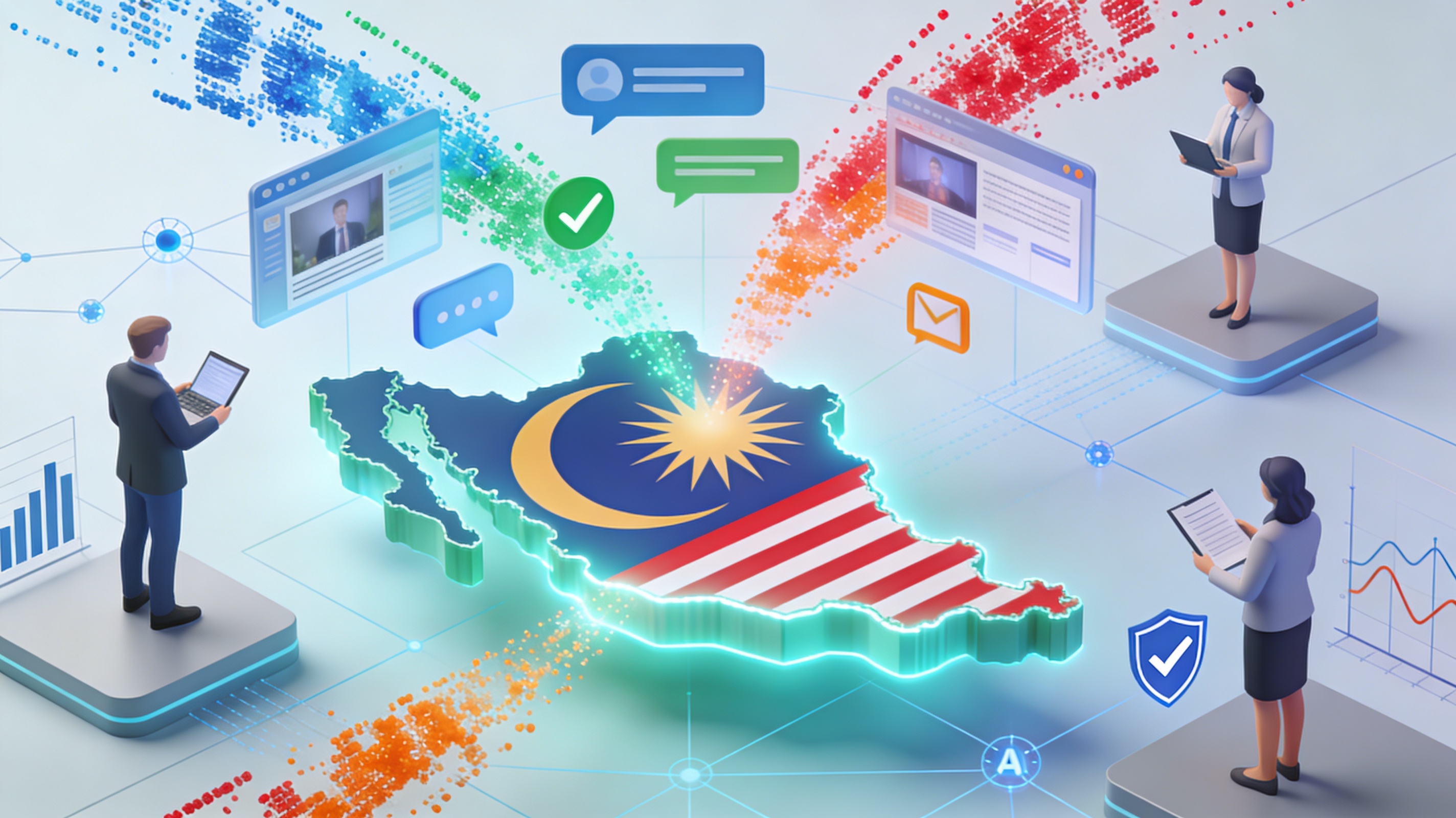
The alarming surge of mis/disinformation in Malaysia reflects a form of information disorder shaped by the nation’s digital platform dynamics, ethno-political sensitivities, and contested legal responses. This nexus gives rise to distinctive socio-informational patterns in how false narratives are constructed, diffused, and addressed. Understanding these patterns is critical for effective intervention. This integrative literature review synthesizes findings from 15 peer-reviewed articles to identify and critically examine key socio-informational patterns. The study draws on interdisciplinary theoretical frameworks, including Diffusion of Innovations, Intergroup Threat, and Securitization theories, alongside the psychological concept of confirmation bias, to analyze how technological, psychological, and political factors influence Malaysia’s mis/disinformation landscape. Three emerging socio-informational patterns stand out: rapid digital diffusion of false content, instrumental use of identity-based narratives, and an ongoing struggle between securitized legal control and public resistance. The findings show that algorithm-driven amplification on social media platforms significantly accelerates the spread of mis/disinformation within Malaysia’s hyperconnected society. Besides, disinformation is strategically employed to amplify ethnic and religious divisions, a dynamic further intensified by emerging technologies such as AI-generated deepfakes, posing significant challenges to public trust, social harmony, and democratic resilience. While legislative tools like the Anti-Fake News Act 2018 have proven controversial and limited in effect, citizen-centric mitigation efforts, such as media and information literacy initiatives, are becoming increasingly recognized as more sustainable and practical solutions. The review concludes by calling for continuous, localized educational initiatives and future research that explores how community-driven interventions can strengthen information integrity in diverse societies.
References
Akram, M., Nasar, A., & Arshad-Ayaz, A. (2023). A systematic review for netizens’ response to the truth manipulation on social media. Knowledge Management & E-Learning: An International Journal, 15(2), 322–342. https://doi.org/10.34105/j.kmel.2023.15.018
Allcott, H., & Gentzkow, M. (2017). Social media and fake news in the 2016 election. Journal of Economic Perspectives, 31(2), 211–236. https://doi.org/10.1257/jep.31.2.211
Berger, P. L., & Luckmann, T. (1966). The social construction of reality: A treatise in the sociology of knowledge. New York: Anchor Books.
Briggs, A., & Burke, P. (2018). A social history of the media: From Gutenberg to the Internet (4th ed.). Polity Press.
Campbell, R., Martin, C. R., & Fabos, B. (2020). Media & culture: Mass communication in a digital age (12th ed.). Bedford/St. Martin’s.
Chesney, B., & Citron, D. (2019). Deepfakes: A looming challenge for privacy, democracy, and national security. California Law Review, 107(6), 1753–1820. https://doi.org/10.15779/Z38RV0D15J
Daud, M., & Zulhuda, S. (2020). Regulating the spread of false content online in Malaysia: Issues, challenges and the way forward. International Journal of Business and Society, 21(S1), 32–48. https://www.ijbs.unimas.my/images/repository/pdf/Vol21-S1-paper3.pdf
Eisenstein, E. L. (2012). The printing revolution in early modern Europe (2nd ed.). Cambridge University Press.
Fake news, online provocations dropped after GE15 campaign period. (2022, November 24). Bernama. https://www.bernama.com/en/news.php?id=2141842
Fallis, D. (2015). What is disinformation? Library Trends, 63(3), 401–426. https://doi.org/10.1353/lib.2015.0014
GE15: EC tells voters to ignore fake news about polling day dress code banning slippers, shorts. (2022, November 19). Malay Mail. https://www.malaymail.com/news/malaysia/2022/11/19/ge15-ec-tells-voters-to-ignore-fake-news-about-polling-day-dress-code-banning-slippers-shorts/40648
George, J. (2022). Fortifying the ballot: Addressing disinformation and electoral integrity in Malaysia (ISEAS-Yusof Ishak Institute Perspective No. 72). ISEAS-Yusof Ishak Institute. https://www.iseas.edu.sg/wp-content/uploads/2024/08/ISEAS_Perspective_2024_72.pdf
He, D., & Sannusi, S. N. (2024). Motives of sharing fake news and effects on mental health of social media users: A meta-analysis. Jurnal Komunikasi: Malaysian Journal of Communication, 40(2), 188–204. https://doi.org/10.17576/JKMJC-2024-4002-11
Human Rights Watch. (2018, March 30). Malaysia: Drop proposed ‘fake news’ law. https://www.hrw.org/news/2018/03/30/malaysia-drop-proposed-fake-news-law
Karas, Z. (2024). Effects of AI-generated misinformation and disinformation on the economy. Journal of Science & Technology, 12, 2349–2360. https://dergipark.org.tr/en/download/article-file/4162778
Kemp, S. (2025, March 3). Digital 2025: Malaysia. DataReportal. https://datareportal.com/reports/digital-2025-malaysia
Krznaric, R. (2024). Fake news was invented 500 years ago – We must learn from its history. openDemocracy. https://www.opendemocracy.net/en/fake-news-invention-witch-hunt-history-for-tomorrow-book-roman-krznaric
Lee, K. T. W. (2025). Malaysia’s media freedom: A new dawn under Anwar Ibrahim or history repeating? In P. V. Kien, D. A. Duc, N. T. T. Hang, & N. K. Nga (Eds.), Digital convergence in media: Vietnam and transnational perspectives (pp. 445–470). Nomos. https://doi.org/10.5771/9783748954286-445
Lee, K. T. W., & Wong, W. W. (2020). Framing Jawi-Khat move: A comparative analysis of Chinese, English and Malay-language newspapers in Malaysia. Malaysian Journal of Communication, 36(4), 194–210. https://doi.org/10.17576/JKMJC-2020-3604-12
Levack, B. P. (2016). The witch-hunt in early modern Europe (4th ed.). Routledge.
Loomba, S., de Figueiredo, A., Piatek, S. J., de Graaf, K., & Larson, H. J. (2021). Measuring the impact of COVID-19 vaccine misinformation on vaccination intent in the UK and USA. Nature Human Behaviour, 5(3), 337–348. https://doi.org/10.1038/s41562-021-01056-1
Lund, K. (2022, November 23). PDRM confirms that viral TikTok photos of a “riot” in Perak regarding GE15 are fake. Juice. https://juiceonline.com/tiktok-ge15-riot-perak-fake
Malaysia accused of muzzling critics with jail term for fake news. (2018, March 26). The Guardian. https://www.theguardian.com/world/2018/mar/26/malaysia-accused-of-muzzling-critics-with-jail-term-for-fake-news
Meserole, C. (2018, May 9). How misinformation spreads on social media—and what to do about it. The Brookings Institution. https://www.brookings.edu/articles/how-misinformation-spreads-on-social-media-and-what-to-do-about-it
Ministry of Communications and Digital. (2022). Fake news spreaders deserve heavier penalty. https://www.komunikasi.gov.my/awam/berita/23980-fake-news-spreaders-deserve-heavier-penalty
MOH acted on 14 viral fake news posts for Covid misinformation. (2022, March 3). CodeBlue. https://codeblue.galencentre.org/2022/03/moh-acted-on-14-viral-fake-news-posts-for-covid-misinformation
Mohd Yatid, M. (2019). Truth tampering through social media: Malaysia’s approach in fighting disinformation & misinformation. IKAT: The Indonesian Journal of Southeast Asian Studies, 2(2), 203–230. https://doi.org/10.22146/ikat.v2i2.40482
Nain, Z. (2023, June 14). Malaysia: Three years of the pandemic, lockdowns, and political and economic uncertainty deepen worries for print media. Reuters Institute Digital News Report. https://reutersinstitute.politics.ox.ac.uk/digital-news-report/2023/malaysia
Neo, R. (2021). The failed construction of fake news as a security threat in Malaysia. Contemporary Politics, 27(3), 316–335. https://doi.org/10.1080/13569775.2021.1884397
Neyazi, T. A., Nadaf, A. H., Tan, K. E., & Schroeder, R. (2024). Does trust in government moderate the perception towards deepfakes? Comparative perspectives from Asia on the risks of AI and misinformation for democracy. Government Information Quarterly, 41(2), 101980. https://doi.org/10.1016/j.giq.2024.101980
Radue, M. (2019). Harmful disinformation in Southeast Asia: “Negative campaigning”, “information operations” and “racist propaganda” – Three forms of manipulative political communication in Malaysia, Myanmar, and Thailand. Journal of Contemporary Eastern Asia, 18(2), 68–89. https://doi.org/10.17477/jcea.2019.18.2.068
Rafizi’s Tabung Haji claims example of why we need fake news law. (2018, April 3). New Straits Times. https://www.nst.com.my/news/nation/2018/04/352017/rafizis-tabung-haji-claims-example-why-we-need-fake-news-law
Rogers, E. M. (1983). Diffusion of innovations (3rd ed.). New York, NY: Free Press.
Ross, A. S., & Rivers, D. J. (2022). Discursive deflection: Accusation of “fake news” and the spread of mis- and disinformation in the public sphere. Social Media + Society, 8(2), 1–12. https://doi.org/10.1177/2056305118776010
Rozwan, I. D., Husin, A. K., Nazri, A. S., Zainal, N. A., & Hassan, M. S. (2023). The impact of fake news on political leaders: Reputation, policies and public perception. e-Journal of Media & Society, 6(2), 43–54.
Sabri, S. A., & Abdul Rahim, N. R. (2023). Ethical implications of fake news: A meta-analysis through the lens of Islamic teachings. Al-i’lam: Journal of Contemporary Islamic Communication and Media, 3(2), 157–168.
Saharrudin, N. F., Ahmad Ghazali, A. H., Ismail, I. A., Arshad, M. M., Mohd Zawawi, J. W., & Wan Mokhtar, W. I. (2023). Reasons for fake news dissemination: A systematic review. International Journal of Academic Research in Business and Social Sciences, 13(17), 284–302. https://doi.org/10.6007/ijarbss/v13-i17/19836
Shoib, M. R., Wang, Z., Ahvanooey, M. T., & Zhao, J. (2023). Deepfakes, misinformation, and disinformation in the era of frontier AI, generative AI, and large AI models. AI & Society, 38(1), 1–7. https://doi.org/10.48550/arXiv.2311.17394
Snyder, H. (2019). Literature review as a research methodology: An overview and guidelines. Journal of Business Research, 104, 333–339. https://doi.org/10.1016/j.jbusres.2019.07.039
Social media posts on unrest all false, say police. (2015, July 16). Malaysiakini. https://www.malaysiakini.com/news/305323
Stephan, W. G., & Stephan, C. W. (2000). An integrated threat theory of prejudice. In S. Oskamp (Ed.), Reducing prejudice and discrimination (pp. 23–45). Lawrence Erlbaum Associates Publishers.
Tandoc, E. C., Lim, Z. W., & Ling, R. (2018). Defining ‘fake news’: A typology of scholarly definitions. Digital Journalism, 6(2), 137–153. https://doi.org/10.1080/21670811.2017.1360143
Tapsell, R. (2023). Social media and Malaysia’s 2022 election: The growth and impact of video campaigning. Pacific Affairs, 96(2), 303–322. https://doi.org/10.5509/2023962303
The threat of deepfake to Malaysia. (2019, July 19). The Malaysian Reserve. https://themalaysianreserve.com/2019/07/19/the-threat-of-deepfake-to-malaysia
Torraco, R. J. (2005). Writing integrative literature reviews: Guidelines and examples. Human Resource Development Review, 4(3), 356–367. https://doi.org/10.1177/1534484305278283
Vaccari, C., & Chadwick, A. (2020). Deepfakes and disinformation: Exploring the impact of synthetic political video on deception, uncertainty, and trust in news. Social Media + Society, 6(1), 1–13. https://doi.org/10.1177/2056305120903408
Wæver, O. (1995). Securitization and desecuritization. In R. D. Lipschutz (Ed.), On security (pp. 46–86). Columbia University Press.
Wan Hashridz Rizal Wan Abu Bakar, Abdul Rauf Ridzuan, Mohd Sufiean Hassan, & Fahmi Zaidi Abd Razak. (2025). Exploring fake news sharing among Malaysian university students: Role of uses and gratification theory. Environment-Behaviour Proceedings Journal, 10(SI26), 21–26. https://doi.org/10.21834/e-bpj.v10iSI26.6788
Wan, C., Waheed, M., Zawawi, J. W. M., & Hellmueller, L. (2023). The framing of anti-fake news law in Malaysian newspapers. International Journal of Academic Research in Business and Social Sciences, 13(3), 1208–1224. http://dx.doi.org/10.6007/IJARBSS/v13-i3/16557
Wardle, C. (2017, February 16). Fake news. It’s complicated. First Draft News. https://firstdraftnews.org/articles/fake-news-complicated
Wardle, C., & Derakhshan, H. (2017). Information disorder: Toward an interdisciplinary framework for research and policymaking. Council of Europe. https://rm.coe.int/information-disorder-toward-an-interdisciplinary-framework-for-researc/168076277c018.1502047
Wason, P. C. (1960). On the failure to eliminate hypotheses in a conceptual task. Quarterly Journal of Experimental Psychology, 12(3), 129–140. https://doi.org/10.1080/17470216008416717
Weiss, M. L. (2013). Protest and possibilities: Civil society and coalitions for political change in Malaysia. Stanford University Press.
West, D. M. (2021). How to combat fake news and disinformation. Brookings Institution. https://www.brookings.edu/research/how-to-combat-fake-news-and-disinformation
Whittemore, R., & Knafl, K. (2005). The integrative review: Updated methodology. Journal of Advanced Nursing, 52(5), 546–553. https://doi.org/10.1111/j.1365-2648.2005.03621.x
World Health Organization. (2020, February 2). Novel coronavirus (2019-nCoV): Situation report - 13. https://www.who.int/docs/default-source/coronaviruse/situation-reports/20200202-sitrep-13-ncov-v3.pdf
Zaifuddin, N. S., Adzharuddin, N. A., Osman, M. N., & Mohd Zawawi, J. W. (2023). Fake news during COVID-19 in Malaysia: How Ministry of Health encountered fake news contagion in Facebook context. International Journal of Academic Research in Business and Social Sciences, 13(12), 5833–5843. https://doi.org/10.6007/ijarbss/v13-i12/20392
Zainudin, J., Ali, N. M., Smeaton, A. F., & Ijab, M. T. (2024). Intervention strategies for misinformation sharing on social media: A bibliometric analysis. IEEE Access, 12, 140359–140379. https://doi.org/10.1109/ACCESS.2024.3469248
Zannettou, S., Sirivianos, M., Blackburn, J., & Kourtellis, N. (2018). The web of false information: Rumors, fake news, hoaxes, clickbait, and various other shenanigans. Journal of Data and Information Quality, 11(3), 1–37. https://doi.org/10.1145/3309699
Downloads
Published
How to Cite
License
Copyright (c) 2026 Kenneth Tze Wui Lee, Zhi Xin Sau

This work is licensed under a Creative Commons Attribution 4.0 International License.