The Evolution of Digital Violence in the Indonesian Media Ecosystem: An Analysis of the Patterns and Characteristics of Digital Attacks 2021-2025
Evolusi Kekerasan Digital dalam Ekosistem Media di Indonesia: Pola dan Karakteristik Serangan Digital Tahun 2021-2025
Keywords:
serangan digital, kebebasan bermedia, evolusi represi, analisis isiAbstract
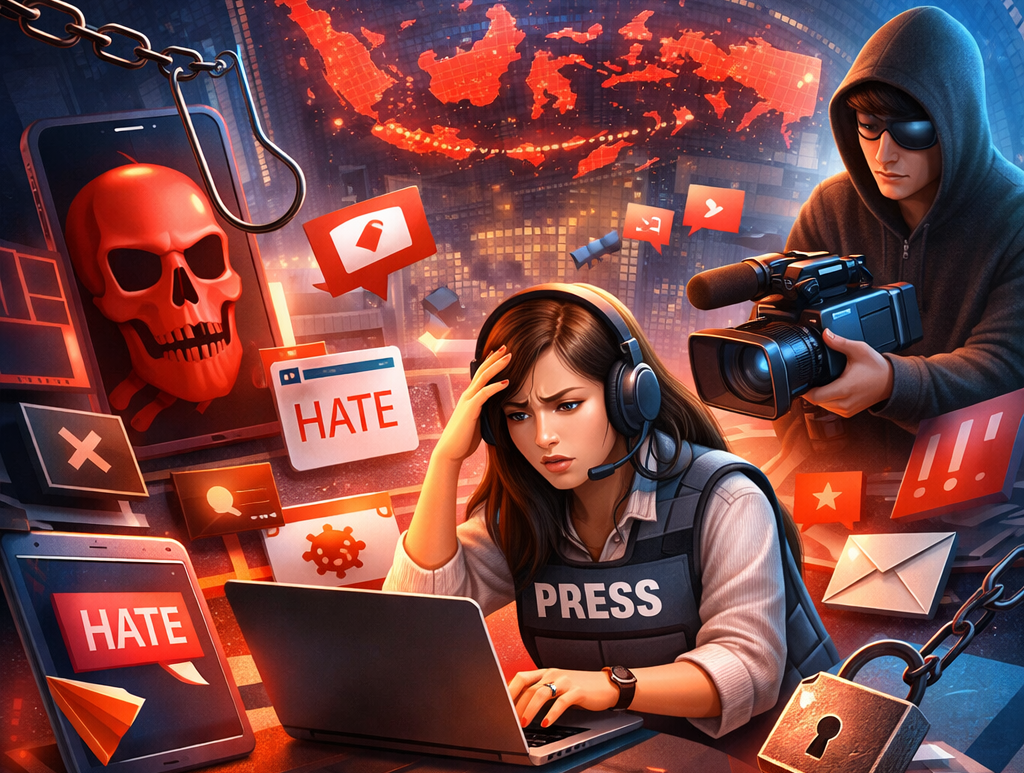
Kebebasan bermedia di Indonesia mengalami tantangan serius seiring pergeseran pola represi dari kekerasan fisik menjadi kekerasan digital yang sistematis. Studi ini menganalisis pola serta karakteristik serangan digital terhadap jurnalis dan media pada periode 2021-2025 untuk memahami transformasi represi dalam ekosistem media digital. Penelitian dilakukan dengan metode analisis isi kualitatif terhadap 57 laporan yang dihimpun Aliansi Jurnalis Independen dan diperkuat dengan desk study guna menjamin keabsahan data. Kerangka analisis mengacu pada kategorisasi kekerasan digital AJI yang meliputi: malware, phising, hacking, doxing, impersonating, pelecehan daring, dan kekerasan berbasis gender daring. Hasil studi ini menunjukkan peretasan dan Distributed Denial of Service (DDoS) menjadi mekanisme serangan yang paling banyak terjadi. Website berita menjadi target utama serangan digital, yang mengindikasikan strategi sistematis untuk melumpuhkan infrastruktur produksi dan distribusi informasi. Selain itu, studi ini juga menunjukkan bahwa serangan digital tidak hanya menyasar media nasional namun juga media lokal. Temuan ini menunjukkan keterkaitan antara intensitas serangan dengan momentum politik yang sensitif, sekaligus pemanfaatan kelemahan sistem media sebagai celah terjadinya serangan digital. Penguatan infrastruktur keamanan digital pada akhirnya menjadi kebutuhan mendesak untuk menjaga keberlangsungan kebebasan bermedia pada ekosistem digital.
References
Allen, D. (2008). The Trouble with Transparency: The Challenge of Doing Journalism Ethics in a Surveillance Society. Journalism Studies, 9(3), 323-340.
Altheide, D. (2011). Qualitative Media Analysis. New York : Sage Publications.
Aradau, C., Blanke, T., & Greenwat, G. (2019). Acts of Digital Parasitism: Hacking, Humanitarian Apps and Platformisation. New Media & Society, 21(11-12), 2548-2565.
Badran, M. (2017). Violence Against Journalists: Suppressing Media Freedom. In M. Friedrichsen, & Y. Kamalipour, Digital Transformation in Journalism and News Media (pp. https://doi.org/10.1007/978-3-319-27786-8_31). Cham : Springer.
Cheong, H., Lyons, A., Houghton, R., & Majumdar, A. (2023). Secondary Qualitative Research Methodology Using Online Data within the Context of Social Sciences. International Journal of Qualitative Methods, 22, 1-19.
Ciglic, K., & Hering, J. (2021). A Multi-Stakeholder for Foundation for Peace in Cyberspace. Journal of Cyber Policy, 6(3), 360-374.
Cobbe, J. (2021). Algorithmic Cencorship by Social Platforms: Power and Resistance. Philosophy & Technology, 34, 739-766.
Dodds, T. (2019). Reporting with WhatsApp: Mobile Chat Applications Impact on Journalistic Practices. Digital Journalism, 7(6), 725-745.
Dodds, T., Geboers, M., & Boukes, M. (2023). "It Became No Man's Land": The Burden of Moderating Online Harassment in Newswork. Journalism Practice , https://doi.org/10.1080/17512786.2024.2387664.
Donovan, J., & Boyd, D. (2021). Stop the Presses? Moving from Strategic Silence to Strategic Amplification in a Networked Media Ecosystem. Americal Behavioral Scientiest, 65(2), 333-350.
Dragu, T., & Lupu, Y. (2021). Digital Authoritarianism and The Future of Human Rights. International Organization, 75(4), 991-1017.
Feldstein, S. (2021). The Rise of Digital Repression: How Technology is Reshaping Power, Politics, and Resistance. New York: Oxford University Press.
Gohdes, A. (2024). Repression in The Digital Age: Surveillance, Cencorship, and the Dynamics of State Violance. New York : Oxford University Press.
Henrichsen, J., & Shelton, M. (2023). Expanding the Analytical Boundaries of Mob Censorship: How Technology and Infrastructure Enable Novel Threats to Journalists and Strategies for Mitigation. Digital Journalism, 11, 1848-1867.
Hidayat, R., & Rusadi, U. (2025). Ekonomi Politik Media Platform Lokal: Relasi Kuasa antara Pemerintah Daerah dan Media Online di Jawa Timur. Scriptura: Jurnal Ilmu Komunikasi, 15(1), 50-63.
Jungherr, A., Rivero, G., & Gayo-Avello, D. (2020). Retooling Politics: How Digital Media are Shaping Democracy. Cambridge, New York, Melbourne: Cambridge University Press.
Kalathil, S. (2020). The Evolution of Authoritarian Digital Influence: Grappling with the New Normal. PRISM, 9(1), 32-51.
Katrakazas, P., & Papastergiou, S. (2024). A Stakeholder Needs Analysis in Cybersecurity: A Systematic Approach to Enhancing Digital Infrastructure Resilience. Businesses, 225-240.
Kligler-Vilenchik, N., & Tenenboim, O. (2020). Sustained Journalist-Audience Reciprocity in a Meso News-Space: The Case of a Journalistic WhatsApp Group. New Media & Society, 22(2), 264-282.
Kokshagina, O., Reinecke, P., & Karamasios, S. (2023). To Regulate or Not to Regulate: Unravelling Institutional Tussles Around the Regulation of Algorithmic Control of Digital Platforms. Journal of Information Technology, 38(2), 160-179.
Kubo, T., Izawa, S., Tsuchiya, M., Ikeda, H., Miki, K., & Takahashi, M. (2018). Day to day Variations in Daily Rest Periods Between Working Days and Recovery from Fatigue Among Information Technology Workers: One-Month Observational Study Using a Fatigue App. Journal of Occupational Health, 394-403.
Lee, M., & Butler, B. (2018). How are Information Deserts Created? A Theory of Local Information Landscapes. Journal of Association for Indormation and Technology, 70(2), 101-116.
Lewis, S., Zamith, R., & Coddington, M. (2020). Online Harassment and Its Implications for the Journalist-Audience Relationship. Digital Journalism, 8(8), 1047-1067.
Lindstedt, C., & Naurin, D. (2010). Transparency is not Enough: Making Transparency Effective in Reducing Corruption. International Political Review, 31(3), 301-322.
Loeschner, I. (2017). The Technology Mismatch Paradox of Mobile Email Access: When Changed Norms of Responsiveness Meet Technology Undersupply. The Information Society, 33(3), 133-146.
Masduki. (2021). Media Control in the Digital Politics of Indonesia. Media and Communication , 52-61.
Miller, M., & Vaccari, C. (2020). Digital Threats to Democracy: Comparative Lessons and Possible Remedies. The International Journal of Press/Politics, 25(3), 333-356.
Parcu, P. (2019). New Digital Threats to Media Pluralism in the Information Age. Competition and Regulation in Network Industries, 21(2), 91-109.
Ramadlan, M., & Afala, L. (2024). Politik Media, Media Politik: Pers, Rezim, dan Kemunduran Demokrasi . Malang: Universitas Brawijaya Press.
Raeijmaekers, D., & Maeseele, P. (2015). Media, Pluralism, and Democracy: What's in a Name? Media, Culture, & Society, 37(7), 1042-1059.
Reglitz, M. (2025). Internet and Communications. In J. Qorib, F., Kristie, E., & Hakim, L. (2-24). Analysis of the Use of Constructive Journalism in the News "Police Shoot Police" in the Online Media Tirto.id. Kanal: Jurnal Ilmu Komunikasi, 13(1), 21-30.
Rianto, P. (2023). Sourvillance dan Bentuk-bentuk Baru Pengawasan Warga Negara dalam Demokrasi Digital di Indonesia . Interaksi , 230-249.
Roberts, T., & Oosterom, M. (2024). Digital Authoritarianism: a Systematic Literature Review. Information Technology for Development, 1-25.
Rosenfeld, L., Morville, P., & Arango, J. (2015). Information Architecture For the Web and Beyond. Beijing, Boston, Fanham, Sebastopol, Tokyo: O'Reilly.
RSF. (2025). Reporter Without Borders. Retrieved from Reporter Without Borders: Indonesia: https://rsf.org/en/country/indonesia
Ruzza, M., Tiozzo, B., Mantovani, C., D'Este, F., & Ravarotto, L. (2017). Designing the Information Architecture of a Complex Website: A Strategy Based on News Content and Faceted Classification. International Journal of Information Management, 37, 166-176.
Salvo, P. (2025). Hacking and Information Disorder: The Weaponization of Leaking. Critical Studies in Media Communication, 42(1), 83-88.
Siatitsa, I. (2020). Freedom of Assembly Under Attack: General and Indiscriminate Surveillance and Interference with Internet Communications. International Review of the Red Cross, 102(913), 181-198.
Sinpeng, A. (2019). Digital Media, Political Authoritarianism, and Internet Control in Southeast Asia. Media, Culture, & Society, 42(1), 25-49.
Slavtcheva-Perkova, V., Ramaprasad, J., Springer, N., Hughes, S., Hanitzsch, T., Hamada, B., . . . Steindl, N. (2023). Conceptualizing Journalists' Safety Around the Globle. Digital Journalism, 11(7), 1211-1229.
Tomalty, & K. Woods, The Routledge Handbook of the Philosophy of Human Rights . New York: Routledge.
Torre, L., Ramos, G., Noronha, M., & Jeronimo, P. (2024). Sourcing Local Information in News Deserts. Journalism and Media , 1228-1243.
Tong, J. (2025). Growing Government Secrecy: How and Why Information Access has Become Increasingly Restricted in the UK . Journalism Practice, 1-19.
Urkens, J., Harambam, J., & d'Haenens, L. (2024). Threat or Menace to Media Pluralism? A Framework to Assess ALternative Conspiracy Media in Today's Information Landscape. Journalism , 1-18.
Valke, P., Sukosd, M., & Picard, R. (2015). Media Pluralism and Diversity: Concepts, Risks and Global Trends. New York: Palgrave Macmilan.
Wendratama, E., Suci, P., Suriyani, L., & Masduki. (2024). Laporan Riset Keamanan Perusahaan Media di Indonesia. Jakarta: Aliansi Jurnalis Independen .
Zviyita, I. &. (2024). Same Threats, Different Platforms? Female Journalists Experiences of Online Gender-Based Violence in Selected Newsrooms in Namibia. Journalism, 25(4), 779-799.
Downloads
Published
How to Cite
License
Copyright (c) 2026 Mufti Nurlatifah

This work is licensed under a Creative Commons Attribution 4.0 International License.