Authentic Personality and Self-Presentation in Digital Media: A Study of Roblox Users
Kepribadian Autentik dan Presentasi Diri dalam Media Digital: Studi pada Pengguna Roblox
Keywords:
authentic personality, self presentation, roblox, virtual worldAbstract
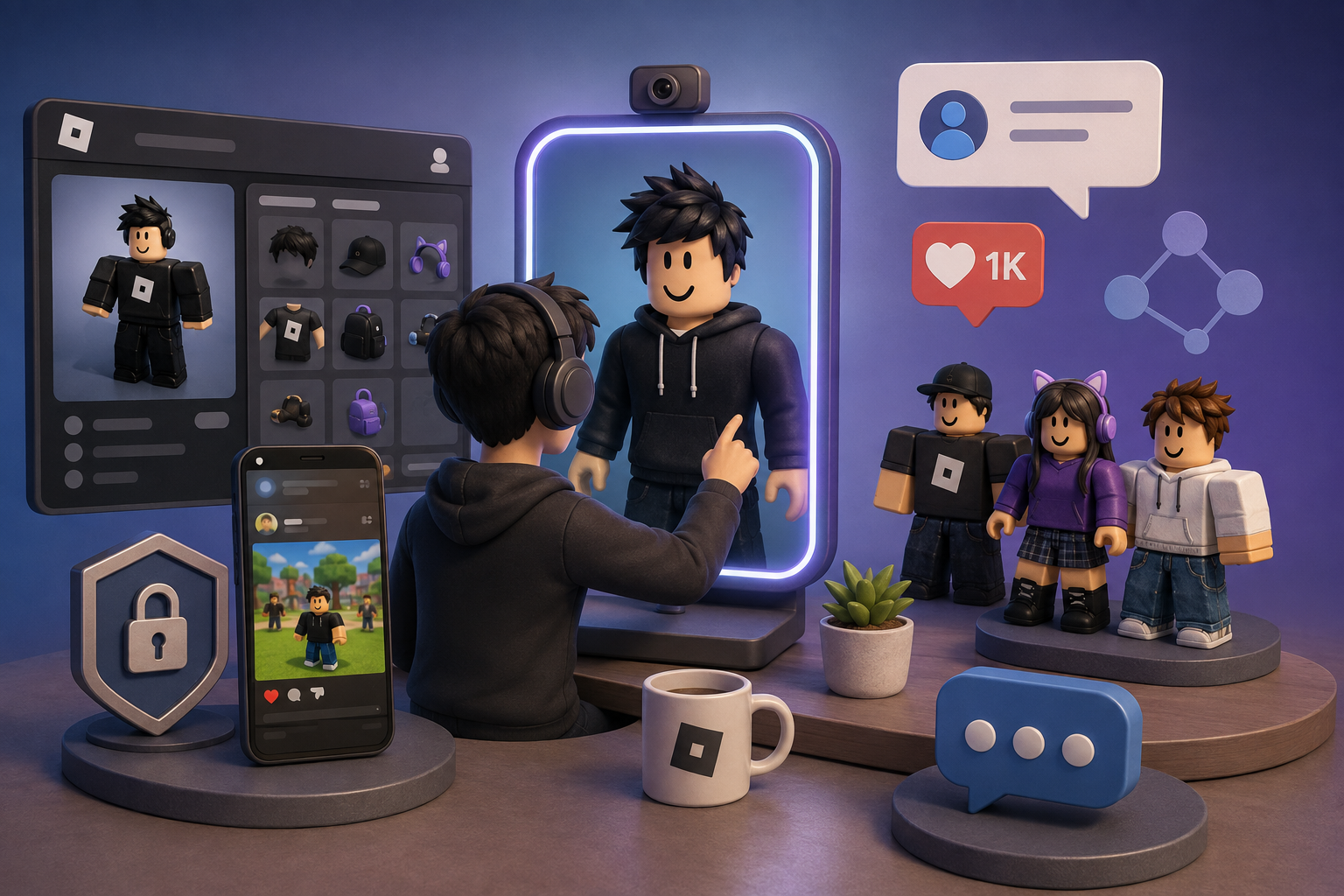
The expansion of digital spaces enables individuals to construct and express their identities through virtual interactions, including on online gaming platforms such as Roblox. However, the freedom to present oneself in digital environments does not always reflect an individual's authentic personality. This study aimed to examine the relationship between authentic personality and self-presentation among Roblox users in Indonesia. A quantitative correlational design with incidental sampling was employed. A total of 249 Roblox users participated in the study. Data were collected using authenticity scale and self-presentation scale and analyzed using Pearson correlation. The results revealed a significant negative relationship between authentic personality and self-presentation. Regression analysis indicated that authentic personality contributed 13.3% to the variance in self-presentation. These findings suggest that individuals with higher levels of authentic personality are less likely to intensively manage or construct their online self-image. The study highlights the importance of authentic personality in understanding self-presentation daring behavior and contributes to the growing literature on digital communication and identity construction in interactive media environments.
References
Annafiah, S., & Mardianto, M. (2025). Kontribusi Need to Belong terhadap Self-Presentation Online pada Remaja di Media Sosial. MASALIQ, 5(1), 427–440. https://doi.org/10.58578/masaliq.v5i1.4778
APJII. (2025). Survei Penetrasi Internet dan Perilaku Penggunaan Internet. Asosiasi Penyelenggara Jasa Internet Indonesia. https://survei.apjii.or.id/survei?emailSent=1
Arikunto, S. (2015). Prosedur Penelitian: Suatu Pendekatan Praktik. Rineka Cipta. https://repositori.telkomuniversity.ac.id/pustaka/98698/prosedur-penelitian-suatu-pendekatan-praktik.html
Febrianti, R., Milla, M. N., Setiamurti, A., Wulandari, A., Handayani, I., & Yuniar -. (2023). MEASUREMENT OF AUTHENTIC PERSONALITY: ADAPTATION OF THE INDONESIAN VERSION OF THE AUTHENTICITY SCALE. Jurnal RAP (Riset Aktual Psikologi Universitas Negeri Padang), 14(1), 72–96. https://doi.org/10.24036/rapun.v14i1.122731
Fusvinda, T., & Kurniawan, R. (2025). Hubungan Antara Online Self Presentation dengan Psychological Well Being Pada Gen Z Pengguna Second Account Instagram. CAUSALITA : Journal of Psychology, 3(1), 225–231. https://doi.org/10.62260/causalita.v3i1.508
Goffman, E. (1959). The Presentation Of Self In Everyday Life. DOUBLEDAY ANCHOR BOOKS. http://crossculturalleadership.yolasite.com/resources/Goffman%20%281959%29%20Presentation%20of%20Self%20in%20Everyday%20Life.pdf
Hanika, I. M. (2016). Self Presentation dalam Kehidupan Virtual. Jurnal ILMU KOMUNIKASI, 13(1), 93. https://doi.org/10.24002/jik.v13i1.601
Haq, A. M. N. (2025, Agustus 13). Roblox Catat 111 Juta Pengguna Aktif Q2 2025 di Tengah Isu Pemblokiran. GoodStats. https://goodstats.id/article/roblox-catat-118-8-juta-pengguna-aktif-harian-pada-q2-2025-di-tengah-isu-pemblokiran-gim-di-indonesia-CTqr7
Harter, S. (2002). Authenticity. Dalam Handbook of positive psychology (hlm. 382–394). Oxford University Press.
Hayati, S. R., & Fitriani, Y. (2024). Hubungan Kecenderungan Narsistik Terhadap Self Presentation Pada Remaja Dalam Platfrom Tiktok Di Sma Pusaka Nusantara 2 Bekasi. WACANA, 16(2), 136–145. https://doi.org/10.20961/wacana.v16i2.88809
Herring, S. C., & Kapidzic, S. (2015). Teens, Gender, and Self-Presentation in Social Media. International Encyclopedia of the Social & Behavioral Sciences (Second Edition), 146–152. https://doi.org/10.1016/B978-0-08-097086-8.64108-9
Hildhasari, G., & Dharma, F. (2024). Self-Disclosure in Introverted Individuals on Social Media from Erving Goffman’s Dramaturgical Perspective: Self-Disclosure pada Individu Introvert di Media Sosial dalam Perspektif Dramaturgi Erving Goffman. Indonesian Journal of Cultural and Community Development, 16(1), 1–10. https://doi.org/https://doi.org/10.21070/ijccd.v16i1.1169
Jumlah Laporan Polisi Yang Dibuat Masyarakat. (2025). Patroli Siber. https://patrolisiber.id/statistic/
Junitasari, E., & Akalili, A. (2023). Representasi konsep diri Crossplayer dalam akun Facebook “CROSSDRESS COSPLAY ID.” Lektur: Jurnal Ilmu Komunikasi, 6(3). https://doi.org/10.21831/lektur.v6i3.20958
Kulsum, U., Bukhori, I., & Winarsih, N. (2024). Analisis Self Presenting Remaja di Media Sosial: Analysis of Teenagers Self-Presenting on Social Media. Moderasi: Jurnal Studi Ilmu Pengetahuan Sosial, 5(1), 20–34. https://doi.org/10.24239/moderasi.Vol5.Iss1.222
Kusumasari, H., & Hidayati, D. S. (2014). Rasa Malu Dan Presentasi Diri Remaja Di Media Sosial. Jurnal Psikologi Teori Dan Terapan, 4(2), 91–105. https://doi.org/10.26740/jptt.v4n2.p91-105
Kusumastuti, F., Santi, Astuti, I., Dwi Astuti, Y., Astuti, M., Birowo, L., Esti, P., Hartanti, N., Ras, A., & Kurnia, N. (2022). Etis Bermedia Digital.
Lapidot-Lefler, N., & Barak, A. (2012). Effects of anonymity, invisibility, and lack of eye-contact on toxic online disinhibition. Computers in Human Behavior, 28(2), 434–443. https://doi.org/10.1016/j.chb.2011.10.014
Linder, J. (2025, April 29). Catfishing Statistics Statistics: Market Data Report 2025. Gitnux. https://gitnux.org/catfishing-statistics/
Mac Giolla, E., & Stenbock, S. (2025). Acting Like a Liar: An Experimental Test of the Self-Presentational Theory of Deception. Journal of Nonverbal Behavior, 49(3), 377–391. https://doi.org/10.1007/s10919-025-00486-z
Michikyan, M., Dennis, J., & Subrahmanyam, K. (2014). Can You Guess Who I Am? Real, Ideal, and False Self-Presentation on Facebook Among Emerging Adults. Emerging Adulthood, 3(1), 55–64. https://doi.org/10.1177/2167696814532442
Monaro, M., Gamberini, L., Zecchinato, F., & Sartori, G. (2018). False Identity Detection Using Complex Sentences. Frontiers in Psychology, 9. https://doi.org/10.3389/fpsyg.2018.00283
Mulyadi, M., Nurdin, A. A., Anjani, A. A., Alamsyah, F. D., Sifana, F., Yudistio, M. A., Maulana, M. K., & Rabbani, R. A. A. (2024). Analisis Penipuan Online Melalui Media Sosial Dalam Perspektif Kriminologi. Media Hukum Indonesia (MHI), 2(2), 74–82. https://doi.org/10.5281/zenodo.11183088
Praditha, K. S. G., & Wulanyani, N. M. S. (2024). Faktor-Faktor Yang Memengaruhi Adiksi Media Sosial Pada Mahasiswa: Literature Review. Innovative: Journal Of Social Science Research, 4(2), 2506–2524. https://doi.org/10.31004/innovative.v4i2.9628
Putri, F. R., Ariyani, M., & Wahyuni, L. D. (2024). Personality Traits Conscientiousness and Openness to Experience as a Predictors of Authentic Self-Presentation Online. 73–81. https://doi.org/10.2991/978-2-38476-303-0_8
Rarasati, D. B., Hudaniah, H., & Prasetyaningrum, S. (2019). Strategi presentasi diri pengguna instagram ditinjau dari tipe kepribadian. Jurnal Ilmiah Psikologi Terapan, 7(2), 235–251. https://doi.org/10.22219/jipt.v7i2.8164
Reza, A., & Tetteng, B. (2025). Hubungan Harga Diri dengan Presentasi Diri Remaja Pengguna Instagram. Observasi : Jurnal Publikasi Ilmu Psikologi, 3(2), 234–251. https://doi.org/10.61132/observasi.v3i2.1128
Robaiyani, S., Nada, S. Q., & Afghani, A. A. A. (2025). Self-Esteem dan Dukungan Sosial terhadap Online Self Presentation pada Mahasiswa. Jurnal Sublimapsi, 6(2), 185–193. https://doi.org/10.36709/sublimapsi.v6i2.179
Rogers, C. R. (Carl R. (with Internet Archive). (1951). Client-centered therapy: Its current practice, implications, and theory. Boston : Houghton Mifflin Co. http://archive.org/details/clientcenteredth0000roge_a7x6
Safitri, D., Fitriani, A., & Izzati, I. D. C. (2023). Hubungan Self Consciousness Dan Body Image Dengan Self Presentation Pengguna Instagram. Psyche: Jurnal Psikologi, 5(1), 60–73. https://doi.org/10.36269/psyche.v5i1.1217
Schlosser, A. E. (2020). Self-disclosure versus self-presentation on social media. Current Opinion in Psychology, Privacy and Disclosure, Online and in Social Interactions, 31, 1–6. https://doi.org/10.1016/j.copsyc.2019.06.025
Setiadarma, A., Abdullah, A. Z., Priyono, S., & Firmansyah, D. (2024). Tinjauan Literatur Transformasi Sosial dalam Era Virtual. ResearchGate, 4(1), 232–244. https://doi.org/10.55606/khatulistiwa.v4i1.2930
Simanjuntak, M. J. T., & Putri, L. W. (2023). Identifikasi Online Deception Behavior Dan Kecemasan Sosial Pada Pengguna Instagram Di Jabodetabek. Sebatik, 27(1), 127–137. https://doi.org/10.46984/sebatik.v27i1.1922
Snyder, C. R., & Lopez, S. J. (2002). Handbook of positive psychology (hlm. xviii, 829). Oxford University Press. http://www.ldysinger.com/@books1/Snyder_Hndbk_Positive_Psych/Snyder_Lopez_Handbook_of_Positive_Psychology.pdf
Sugiyono. (2013). Metode Penelitian Kuantitatif, Kualitatif, dan RD. //elibrary.stikesghsby.ac.id%2Findex.php%3Fp%3Dshow_detail%26id%3D1879%26keywords
Suharno. (2025, Agustus 16). Waspada! 7 Modus Penipuan di Roblox yang Harus Dihindari. https://selular.id/2025/08/waspada-7-modus-penipuan-di-roblox-yang-harus-dihindari/
Suler, J. (2004). The Online Disinhibition Effect. CyberPsychology & Behavior, 7(3), 321–326. https://doi.org/10.1089/1094931041291295
Tama, B. A. (2018). Validitas Skala Presentasi Diri Online. JP3I (Jurnal Pengukuran Psikologi Dan Pendidikan Indonesia), 7(1), 1–7. https://doi.org/10.15408/jp3i.v7i1.12102
Wood, A., Linley, P., Maltby, J., Baliousis, M., & Joseph, S. (2008). The Authentic Personality: A Theoretical and Empirical Conceptualization and the Development of the Authenticity Scale. Journal of Counseling Psychology, 55(3), 385–399. https://doi.org/10.1037/0022-0167.55.3.385
Wulandari, A., Fahrudin, A., & Rahman, A. (2025). Peran Roblox dalam Pembentukan Identitas Generasi Muda: Sebuah Tinjauan Literatur. Interaction Communication Studies Journal, 2(2), 15–15. https://doi.org/10.47134/interaction.v2i2.4777
Downloads
Published
How to Cite
License
Copyright (c) 2026 Tiara Salsabilla, Miftahun Najah

This work is licensed under a Creative Commons Attribution 4.0 International License.