The Significance of Strength Training as a Lifestyle for Urban Women: A Symbolic Interactionism Study of Fitgoal Members in Bandung
Makna Strength Training sebagai Gaya Hidup Perempuan Urban: Studi Interaksionisme Simbolik pada Member Fitgoal Bandung
Keywords:
strength training, urban women, lifestyle, symbolic interactionism, identityAbstract
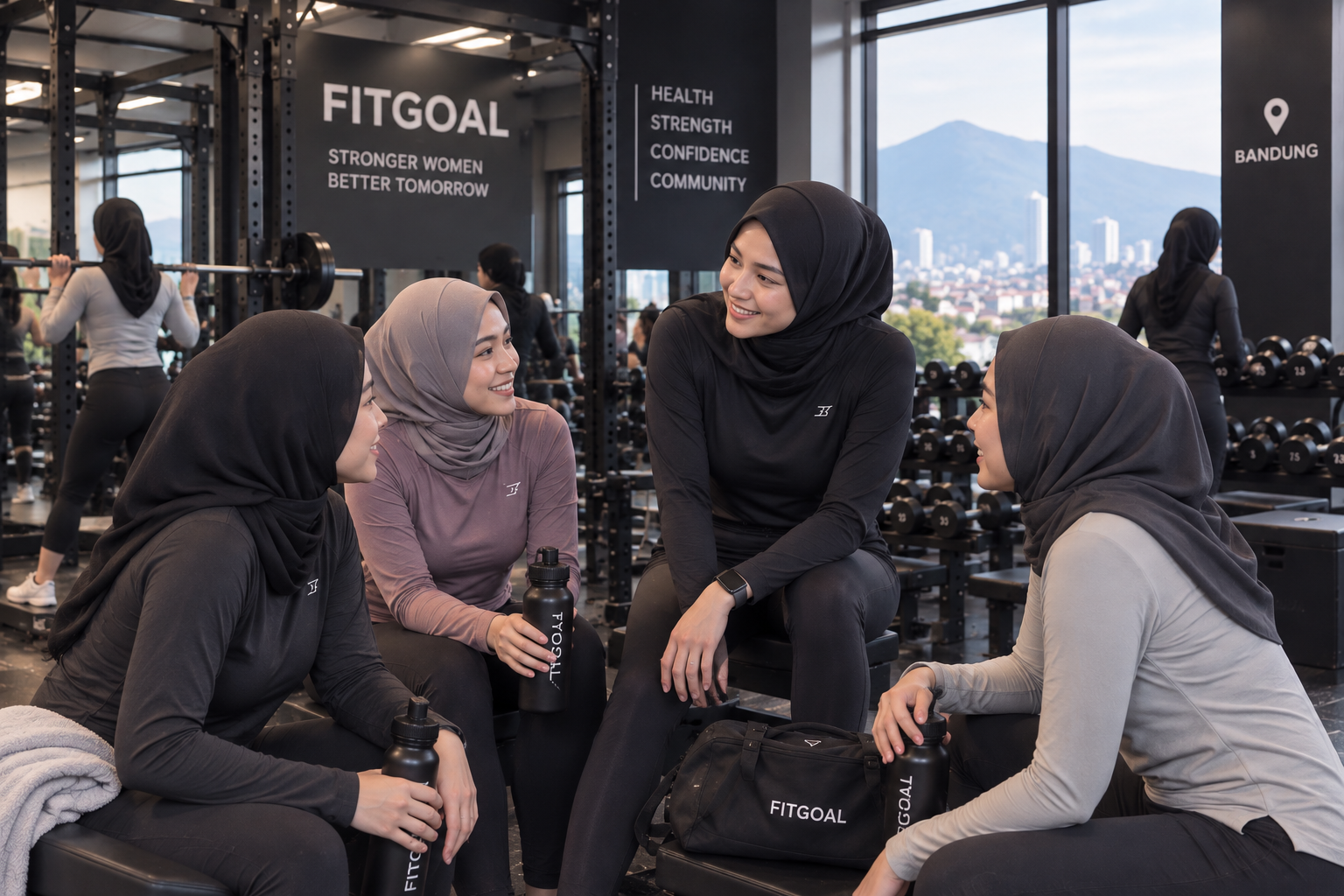
The increase in women’s participation in strength training indicates that fitness activities are no longer solely focused on physical condition but are also linked to identity, social relationships, and lifestyle. This study aims to analyze the process of constructing and negotiating the meaning of strength training as a lifestyle for urban women among members of Fitgoal Bandung through the lens of George Herbert Mead’s Symbolic Interactionism. The study employed a qualitative approach with an interpretive paradigm. Data were collected through in-depth interviews, nonparticipant observation, and digital documentation from ten female members of Fitgoal Bandung who were selected via purposive sampling and had been engaging in regular strength training for at least six months. Data were analyzed using the Miles, Huberman, and Saldaña model through data condensation, data presentation, and the drawing and verification of conclusions. The results identified four main meanings: strength training as an investment in health and a strong body; a shaper of identity and self-confidence; the gym community as a space for interaction and social support; and social media as an arena for the representation and negotiation of identity. The findings indicate that the meaning of strength training is formed dynamically through the interconnection of Mind, Self, and Society. This activity becomes part of a lifestyle when it is sustainably integrated with health management, self-identity, routines, social relationships, and self-representation in daily life.
References
Ahyar, H., Andriani, H., Sukmana, D. J., Hardani, S. P., Ms, N. H. A., Gc, B., Helmina Andriani, M. S., Fardani, R. A., Ustiawaty, J., & Utami, E. F. (2020). Buku metode penelitian kualitatif & kuantitatif. Yogyakarta: CV. Pustaka Ilmu.
Angerer, K. M. (2025). Women, sport and social inclusion in Saudi Arabia. International Review for the Sociology of Sport, 10126902251388676.
Bijaksana, A. (2025). Pendekatan Teori Interaksionisme Simbolik Dalam Metodologi Penelitian Kualitatif. PESHUM : Jurnal Pendidikan, Sosial Dan Humaniora, 4(2 SE-Articles), 2244–2256. https://doi.org/10.56799/peshum.v4i2.7697
Brivio, F., Viganò, A., Paterna, A., Palena, N., & Greco, A. (2023). Narrative Review and Analysis of the Use of “Lifestyle” in Health Psychology. International Journal of Environmental Research and Public Health, 20(5). https://doi.org/10.3390/ijerph20054427
Deininger, C., Teriba, A. A., & Foley-Nicpon, M. (2025). Objectification and self-determination in fitness: A qualitative investigation of women’s motivations for physical exercise. Social Sciences, 14(11), 644.
Fadli, M. R. (2021). Memahami Desain Metode Penelitian Kualitatif. Humanika: Kajian Ilmiah Mata Kuliah Umum, 21(1), 33–54. https://doi.org/10.21831/hum.v21i1.38075
Fitria, N., Subhan, A., & Jamalullail, J. (2025). The Feminine Self-Concept of Muscular Women on the Social Media Platform Instagram. SIGn Journal of Social Science, 6(2), 443–460.
Fragala, M. S., Cadore, E. L., Dorgo, S., Izquierdo, M., Kraemer, W. J., Peterson, M. D., & Ryan, E. D. (2019). Resistance Training for Older Adults: Position Statement From the National Strength and Conditioning Association. The Journal of Strength & Conditioning Research, 33(8). https://journals.lww.com/nsca-jscr/fulltext/2019/08000/resistance_training_for_older_adults__position.1.aspx
Giddens, A. (1991). Modernity and Self-identity: Self and Society in the Late Modern Age. Stanford University Press.
Golaszewski, N. M., LaCroix, A. Z., Hooker, S. P., & Bartholomew, J. B. (2022). Group exercise membership is associated with forms of social support, exercise identity, and amount of physical activity. International Journal of Sport and Exercise Psychology, 20(2), 630–643. https://doi.org/10.1080/1612197X.2021.1891121
Gumilar, G., Kusmayadi, I. M., & Zulfan, I. (2018). Komunitas Olah Raga Untuk Kaum Urban Bandung: Membangun Jaringan Komunikasi Melalui Media Sosial. Jurnal Riset Komunikasi (JURKOM), 1(1), 158–169. https://doi.org/10.24329/jurkom.v1i1.22
Hall, F. C., & Noonan, R. J. (2023). A qualitative study of how and why gym-based resistance training may benefit women’s mental health and wellbeing. Performance Enhancement & Health, 11(3), 100254. https://doi.org/10.1016/j.peh.2023.100254
Hennink, M., & Kaiser, B. N. (2022). Sample sizes for saturation in qualitative research: A systematic review of empirical tests. Social Science & Medicine, 292, 114523. https://doi.org/10.1016/j.socscimed.2021.114523
Khairunissya, N., & Dewi, M. S. (2025). Effectiveness of Women-Only Gyms in Increasing Women’s Exercise Participation A Systematic Review. Journal of Physical Education Health and Sport, 12(2), 473–479.
Laksmi, L. (2017). Teori interaksionisme simbolik dalam kajian ilmu perpustakaan dan informasi. Pustabiblia: Journal of Library and Information Science, 1(2), 121–138. https://doi.org/10.18326/pustabiblia.v1i2.121-138
Matthew B. Miles, A. M. Huberman, J. S. (2014). Qualitative Data Analysis: A Methods Sourcebook (3rd ed.). SAGE Publications.
Mead, G. H. (2015). Mind, self & society (Devinitive). University of Chicago press.
Moleong. (2021). Metodologi penelitian kualitatif. Remaja Rosdakarya.
Nelson, M. (2025). Stronger together: towards constructive conversations about strength differences, gender, and sex. Sport, Education and Society, 30(5), 622–634.
Peng, B., Ng, J. Y. Y., & Ha, A. S. (2023). Barriers and facilitators to physical activity for young adult women: a systematic review and thematic synthesis of qualitative literature. International Journal of Behavioral Nutrition and Physical Activity, 20(1), 23.
Prasetyo, M. T. (2026). Sosiologi Olahraga: Olahraga Dalam Konteks Sosial. In T. Media (Ed.), Penerbit Tahta Media (Vol. 1, Issues 1 SE-Katalog Buku). Tahta Media Group.
Razali, G., & Puspita, R. (2023). Gaya hidup urban dalam perspektif postmodern: Studi etnografi komunitas gym terhadap komunikasi dan identitas. Jurnal Mahardika Adiwidia, 3(1), 48–55. https://doi.org/10.36441/mahardikaadiwidi.v3i1.2003
Sassatelli, R. (2010). Fitness culture. Gyms and the commercialization of discipline and fun. In R. Sassatelli (2010) Fitness Culture. Gyms and the Commercialization of Discipline and Fun, Houndsmill, Palgrave. Palgrave Macmillan Ltd.
Saunders, B., Sim, J., Kingstone, T., Baker, S., Waterfield, J., Bartlam, B., Burroughs, H., & Jinks, C. (2018). Saturation in qualitative research: exploring its conceptualization and operationalization. Quality & Quantity, 52(4), 1893–1907. https://doi.org/10.1007/s11135-017-0574-8
Sugiyono, P. (2022). Metode Penelitian Kuantitatif, Kualitatif dan R&D. In Alfabeta (19th ed.). CV Alfabeta.
Vasudevan, A., & Ford, E. (2022). Motivational factors and barriers towards initiating and maintaining strength training in women: a systematic review and meta-synthesis. Prevention Science, 23(4), 674–695.
Veal, A. J. (1993). The concept of lifestyle: a review. Leisure Studies, 12(4), 233–252. https://doi.org/10.1080/02614369300390231
Westcott, W. L. (2012). Resistance Training is Medicine: Effects of Strength Training on Health. Current Sports Medicine Reports, 11(4). https://journals.lww.com/acsm-csmr/fulltext/2012/07000/resistance_training_is_medicine__effects_of.13.aspx
Yusuf, M. (2016). Metode Penelitian Kuantitatif, Kualitatif & Penelitian Gabungan (Suwito (ed.); 4th ed.). Prenada Media.
Downloads
Published
How to Cite
Issue
Section
Categories
License
Copyright (c) 2026 Dimas Satrio Wijaksono, Indah Wenerda

This work is licensed under a Creative Commons Attribution 4.0 International License.