Smart Mobility as Media and Culture: A Thematic Review of Representation, Audience, and Urban Lifestyle
Smart Mobility sebagai Media dan Budaya: Tinjauan Tematik Representasi, Audiens, dan Gaya Hidup Urban
Keywords:
smart mobility, media representation, audience, popular culture, urban lifestyle, thematic literature reviewAbstract
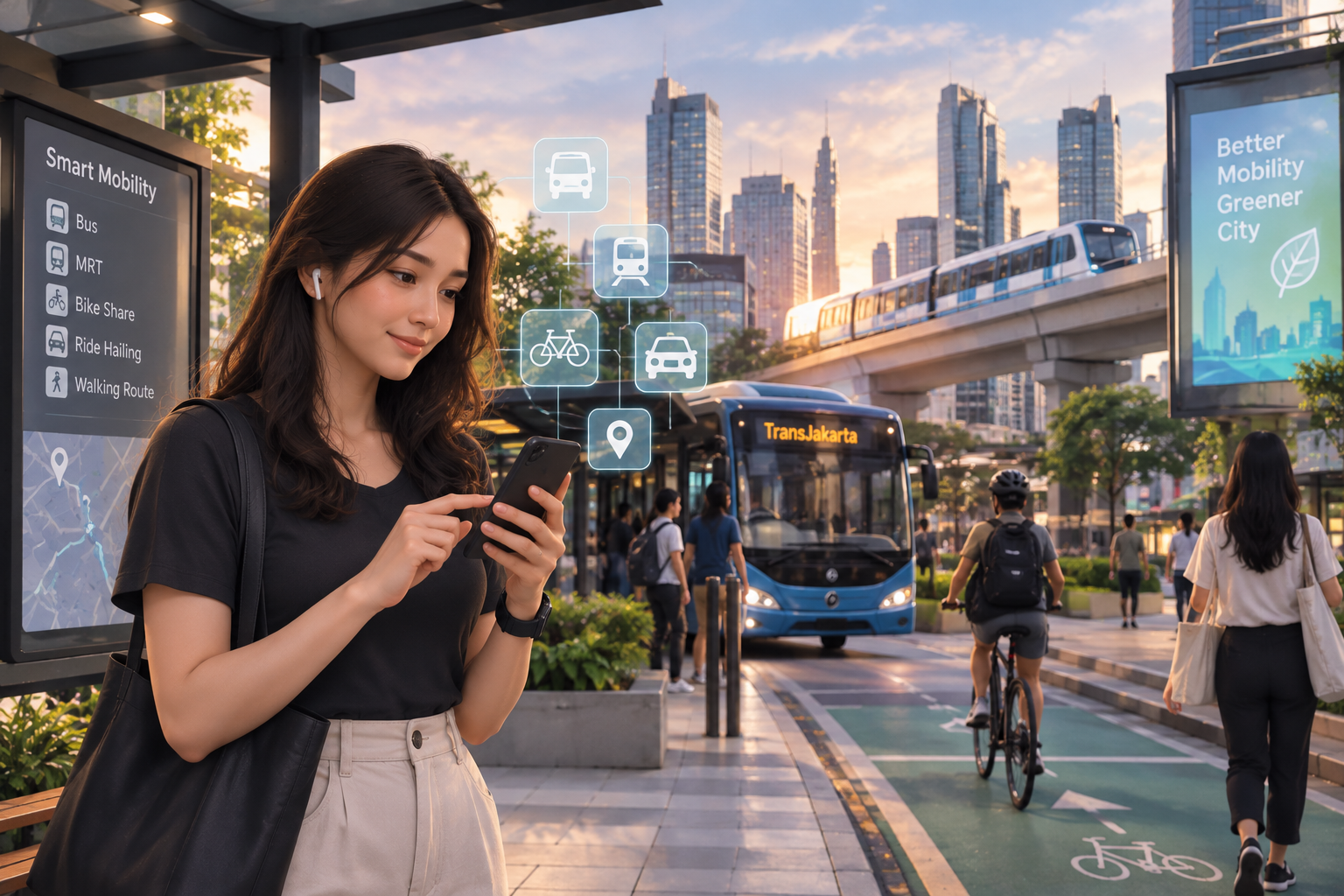
Smart mobility is often discussed as a technological and transport-efficiency agenda, although public adoption also depends on how mobility is represented, interpreted, and experienced through media and culture. This integrative thematic literature review examines scholarship on mobility communication, advertising and popular culture, social media, Generation Z, and film or visual culture. A Preferred Reporting Items for Systematic Reviews and Meta-Analyses (PRISMA)-informed selection process identified 122 unique peer-reviewed journal records published between January 2021 and 26 August 2026; 74 articles proceeded to full-text assessment and 50 were included in the thematic synthesis. Open and axial coding produced nine themes covering socio-technical communication, narrative and visual imagination, green persuasion, participatory culture, audience identity, platform discourse, trust and greenwashing, the attitude-behaviour gap, and mobility justice. The synthesis indicates that media visibility can generate attention and desirability, but trust, identification, service credibility, accessibility, affordability, and local context shape whether symbolic appeal develops into trial, continued use, and advocacy. The study proposes the Smart Mobility Media-Culture (SMMC) Model, which connects service reality, media representation, cultural resonance, audience meaning-making, and mobility behaviour.
References
Abate, Y. A., Niininen, O., Ukpabi, D., & Karjaluoto, H. (2026). Green social media marketing and responsible travel across generations: How content source, trust, and greenwashing shape environmental responsibility. Cleaner and Responsible Consumption, 22, 100455. https://doi.org/10.1016/j.clrc.2026.100455
An, G. K., & Ngo, T. T. A. (2025). Uncovering the influence of social media marketing activities on Generation Z’s purchase intentions and eWOM for organic cosmetics. PLOS ONE, 20(6), e0325953. https://doi.org/10.1371/journal.pone.0325953
Balaskas, S., & Yfantidou, I. (2026). Cross-national evidence on influencer-driven green choice: a moderated-mediation model of authenticity, parasocial ties, and greenwashing exposure. Frontiers in Communication, 11, 1764803. https://doi.org/10.3389/fcomm.2026.1764803
Barry, K., Southern, J., Baxter, T., Blondin, S., Booker, C., Bowstead, J., Butler, C., et al. (2023). An agenda for creative practice in the new mobilities paradigm. Mobilities, 18(3), 349–373. https://doi.org/10.1080/17450101.2022.2136996
Bassanelli, S., Belliato, R., Bonetti, F., Vacondio, M., Gini, F., Zambotto, L., & Marconi, A. (2025). Gamify to persuade: A systematic review of gamified sustainable mobility. Acta Psychologica, 252, 104687. https://doi.org/10.1016/j.actpsy.2024.104687
Behrendt, F., & Sheller, M. (2024). Mobility data justice. Mobilities, 19(1), 151–169. https://doi.org/10.1080/17450101.2023.2200148
Borah, P. S., Dogbe, C. S. K., & Marwa, N. (2024). Generation Z's green purchase behavior: Do green consumer knowledge, consumer social responsibility, green advertising, and green consumer trust matter for sustainable development? Business Strategy and the Environment, 33(5), 4530–4546. https://doi.org/10.1002/bse.3714
Braun, V., & Clarke, V. (2021). One size fits all? What counts as quality practice in (reflexive) thematic analysis? Qualitative Research in Psychology, 18(3), 328–352. https://doi.org/10.1080/14780887.2020.1769238
Brodersen, M., Pink, S., & Forsa, V. (2024). Automating the first and last mile? Reframing the ‘challenges’ of everyday mobilities. Mobilities, 19(1), 87–102. https://doi.org/10.1080/17450101.2023.2218595
Bryła, P., Chatterjee, S., & Ciabiada-Bryła, B. (2022). The Impact of Social Media Marketing on Consumer Engagement in Sustainable Consumption: A Systematic Literature Review. International Journal of Environmental Research and Public Health, 19(24), 16637. https://doi.org/10.3390/ijerph192416637
Chang, H., Huang, J., Yao, W., Zhao, W., & Li, L. (2022). How do new transit stations affect people's sentiment and activity? A case study based on social media data in Hong Kong. Transport Policy, 120, 139–155. https://doi.org/10.1016/j.tranpol.2022.03.011
Del Olmo Arriaga, J. L., Pretel-Jiménez, M., & Ruíz-Viñals, C. (2025). From Fast Fashion to Shared Sustainability: The Role of Digital Communication and Policy in Generation Z’s Consumption Habits. Sustainability, 17(18), 8382. https://doi.org/10.3390/su17188382
Demiris, A., Fountas, G., Fonzone, A., & Basbas, S. (2025). Generation Z’s Travel Behavior and Climate Change: A Comparative Study for Greece and the UK. Big Data and Cognitive Computing, 9(3), 70. https://doi.org/10.3390/bdcc9030070
El-Shihy, D., & Awaad, S. (2025). Leveraging social media for sustainable fashion: how brand and user-generated content influence Gen Z’s purchase intentions. Future Business Journal, 11, 113. https://doi.org/10.1186/s43093-025-00529-3
Fisu, A. A., Syabri, I., & Andani, I. G. A. (2024). Urban dynamics and Gen-Z mobility: The influence of land use diversity and density on daily trip patterns in Indonesia. Sustainable Futures, 8, 100388. https://doi.org/10.1016/j.sftr.2024.100388
Jaska, E., Werenowska, A., & Balińska, A. (2022). Environmentally and Socially Sustainable Behaviors of Generation Z in Poland Stimulated by Mobile Applications. Energies, 15(21), 7904. https://doi.org/10.3390/en15217904
Jeljeli, R., Farhi, F., Mohsen, M., Mallek, M., & Setoutah, S. (2025). Examining the effects of social media storytelling on Gen Z supporting cultural heritage and sustainability in the United Arab Emirates. Frontiers in Sociology, 10, 1653182. https://doi.org/10.3389/fsoc.2025.1653182
Kothari, H., Choudhary, A., Jain, A., Singh, S., Prasad, K. D. V., & Vani, U. K. (2025). Impact of social media advertising on consumer behavior: role of credibility, perceived authenticity, and sustainability. Frontiers in Communication, 10, 1595796. https://doi.org/10.3389/fcomm.2025.1595796
Ktisti, E., Hatzithomas, L., & Boutsouki, C. (2022). Green Advertising on Social Media: A Systematic Literature Review. Sustainability, 14(21), 14424. https://doi.org/10.3390/su142114424
La Rota, S., & Vanoutrive, T. (2025). ‘They want to give us thinking’: the role of filmmaking in creating narratives around mobility and land in the Canton of Ambato, Ecuador. Mobilities, 20(5), 734–752. https://doi.org/10.1080/17450101.2025.2462565
Lampkin, S. R., Barr, S., Williamson, D. B., & Dawkins, L. C. (2023). Engaging publics in the transition to smart mobilities. GeoJournal, 88, 4953–4970. https://doi.org/10.1007/s10708-023-10906-6
Ma, Y., Li, Y., & Han, F. (2024). Interconnected Eco-Consciousness: Gen Z Travelers’ Intentions toward Low-Carbon Transportation and Hotels. Sustainability, 16(15), 6559. https://doi.org/10.3390/su16156559
Mahajan, V., Kuehnel, N., Intzevidou, A., Cantelmo, G., Moeckel, R., & Antoniou, C. (2022). Data to the people: a review of public and proprietary data for transport models. Transport Reviews, 42(4), 415–440. https://doi.org/10.1080/01441647.2021.1977414
Malodia, S., Dhir, A., Bilgihan, A., Sinha, P., & Tikoo, T. (2022). Meme marketing: How can marketers drive better engagement using viral memes? Psychology & Marketing, 39, 1775–1801. https://doi.org/10.1002/mar.21702
McDuie-Ra, D. (2023). Skateboarding in the empty city: a radical archive of alternative pandemic mobilities. Mobilities, 18(5), 821–838. https://doi.org/10.1080/17450101.2022.2154693
Metastasio, R., Bocci, E., Passafaro, P., Carnovale, F., & Zenone, V. (2024). The Social Representation of Sustainable Mobility: An Exploratory Investigation on Social Media Networks. Sustainability, 16(7), 2833. https://doi.org/10.3390/su16072833
Mitieka, D., Luke, R., Twinomurinzi, H., & Mageto, J. (2023). Smart Mobility in Urban Areas: A Bibliometric Review and Research Agenda. Sustainability, 15(8), 6754. https://doi.org/10.3390/su15086754
Mohulatsi, M. (2024). The Sea and Underwater Transport in Imraan Coovadia’s The Institute for Taxi Poetry. English Studies in Africa, 67(2), 77–92. https://doi.org/10.1080/00138398.2024.2385738
Muneer, Q., & Khan, M. A. (2025). Role of YouTube in creating awareness of sustainable transportation: A Latent Dirichlet Allocation approach. Sustainable Futures, 9, 100607. https://doi.org/10.1016/j.sftr.2025.100607
Nikolaidou, A., Kopsacheilis, A., Gavanas, N., & Politis, I. (2024). Assessing the EU Climate and Energy Policy Priorities for Transport and Mobility through the Analysis of User-Generated Social Media Content Based on Text-Mining Techniques. Sustainability, 16(10), 3932. https://doi.org/10.3390/su16103932
Nikolaidou, A., Papaioannou, P., Basbas, S., & Politis, I. (2026). Social Media Sentiment and Service Quality Evidence in Public Transport and Passenger Mobility: A Review. Electronics, 15(14), 3086. https://doi.org/10.3390/electronics15143086
Opelík, D., Voráček, J., Bernardová, G., & Bačuvčík, R. (2025). Communicating sport, sustainability and social activism to generation Z: consumer perceptions. Frontiers in Communication, 10, 1677490. https://doi.org/10.3389/fcomm.2025.1677490
Page, M. J., McKenzie, J. E., Bossuyt, P. M., et al. (2021). The PRISMA 2020 statement: an updated guideline for reporting systematic reviews. BMJ, 372, n71. https://doi.org/10.1136/bmj.n71
Pearce, L., & Spurling, N. J. (2024). Auto/biography and mobilities in the time of climate emergency. Mobilities, 19(5), 807–822. https://doi.org/10.1080/17450101.2024.2393320
Peiró-Signes, Á., Biondo, A., Sakka, G., Borsellino, V., & Galati, A. (2025). Exposure to social media pro-environmental campaigns and its impact on Generation Z’s commitment to environmental sustainability actions. Sustainable Futures, 10, 101320. https://doi.org/10.1016/j.sftr.2025.101320
Rajput, A., & Gandhi, A. (2025). Impact of social media influencer content on generation Z sustainable tourism choices. Discover Sustainability, 6, 1121. https://doi.org/10.1007/s43621-025-02004-z
Rathi, N., & Jain, P. (2024). Impact of meme marketing on consumer purchase intention: Examining the mediating role of consumer engagement. Innovative Marketing, 20(1), 1–16. https://doi.org/10.21511/im.20(1).2024.01
Ribeiro, M. A., Seyfi, S., Elhoushy, S., Woosnam, K. M., & Patwardhan, V. (2023). Determinants of generation Z pro-environmental travel behaviour: the moderating role of green consumption values. Journal of Sustainable Tourism, 33(6), 1079–1099. https://doi.org/10.1080/09669582.2023.2230389
Stiebe, M. (2024). Social big data mining for the sustainable mobility and transport transition: findings from a large-scale cross-platform analysis. European Transport Research Review, 16, 28. https://doi.org/10.1186/s12544-024-00651-3
Sulistiyo, A., Dahana, W. D., & Wihartika, D. (2026). Drivers of Gen Z’s Green Purchase Intention in Public Transportation. Future Transportation, 6(4), 155. https://doi.org/10.3390/futuretransp6040155
Suminar, J. R., Hafiar, H., Amin, K., & Prastowo, A. A. (2024). Predicting pro-environmental behavior among generation Z in Indonesia: the role of family norms and exposure to social media information. Frontiers in Communication, 9, 1461609. https://doi.org/10.3389/fcomm.2024.1461609
Sun, Y., & Xing, J. (2022). The Impact of Social Media Information Sharing on the Green Purchase Intention among Generation Z. Sustainability, 14(11), 6879. https://doi.org/10.3390/su14116879
Tiwari, S. K., Haque, M. A., Kirmani, M. D., & Kumar, S. (2025). How social media advertising influences sustainable purchase intentions in the digital age. Discover Sustainability, 6, 889. https://doi.org/10.1007/s43621-025-01820-7
Toivanen, A.-L. (2021). Aeromobilities of diasporic returnees in Francophone African literatures. Mobilities, 16(4), 597–611. https://doi.org/10.1080/17450101.2021.1898913
Wang, L., Li, X. S., Wang, Q., & Su, L. (2026). From Owning to Connecting: Understanding and Leveraging the Effect of Internet Meme Marketing. Journal of Marketing, OnlineFirst, 1–20. https://doi.org/10.1177/00222429261417674
Wang, W., Gan, H., Wang, X., Lu, H., & Huang, Y. (2022). Initiatives and challenges in using gamification in transportation: a systematic mapping. European Transport Research Review, 14, 41. https://doi.org/10.1186/s12544-022-00567-w
Widaningsih, T. T., & Putranto, A. (2025). Digital tourism communication: effects of influencer credibility, content quality, and e-WoM on emotions, FoMO, self-identification, and visit intentions of Gen Z travelers. Frontiers in Communication, 10, 1717937. https://doi.org/10.3389/fcomm.2025.1717937
Ye, Q., Ozbay, K., Zuo, F., & Chen, X. (2023). Impact of Social Media on Travel Behaviors during the COVID-19 Pandemic: Evidence from New York City. Transportation Research Record, 2677(4), 219–238. https://doi.org/10.1177/03611981211033857
Yigitcanlar, T., Downie, A. T., Mathews, S., Fatima, S., MacPherson, J., Behara, K. N. S., & Paz, A. A. (2024). Digital technologies of transportation-related communication: Review and the state-of-the-art. Transportation Research Interdisciplinary Perspectives, 23, 100987. https://doi.org/10.1016/j.trip.2023.100987
Zayet, T. M. A., Ismail, M. A., Varathan, K. D., Noor, R. M. D., Chua, H. N., Lee, A., Low, Y. C., & Singh, S. K. J. (2021). Investigating transportation research based on social media analysis: a systematic mapping review. Scientometrics, 126(8), 6383–6421. https://doi.org/10.1007/s11192-021-04046-2
Zhang, W., Barchers, C., & Smith-Colin, J. (2023). Transit communication via Twitter during the COVID-19 pandemic. Environment and Planning B: Urban Analytics and City Science, 50(5), 1244–1261. https://doi.org/10.1177/23998083221135609
Zhang, Y., Tong, B., & Wu, L. (2026). Utilitarian or hedonic? A study on the mechanism of short-form video type perception and green brand image construction. Frontiers in Communication, 11, 1810293. https://doi.org/10.3389/fcomm.2026.1810293
Downloads
Published
How to Cite
Issue
Section
License
Copyright (c) 2026 Achmad Arrosyidi, Mochammad Arifin, Hardman Budiardjo

This work is licensed under a Creative Commons Attribution 4.0 International License.